
연결리스트(Linked List)
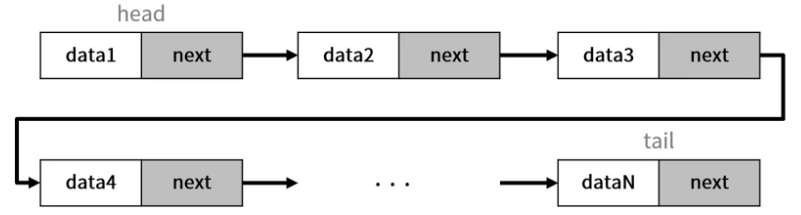
- 데이터를 링크로 연결해서 관리하는 자료구조
- 자료의 순서는 정해져 있지만, 메모리상 연속성이 보장되지는 않음
연결리스트의 장점
- 데이터 공간을 미리 할당할 필요 없음
- 즉, 리스트의 길이가 가변적이라 데이터 추가/삭제 용이
연결리스트의 단점
- 연결구조를 위한 별도 데이터 공간 필요
- 연결 정보를 찾는 시간이 필요(접근 속도가 상대적으로 느림)
- 데이터 추가, 삭제 시 앞뒤 데이터의 연결을 재구성하는 작업 필요
연결리스트 기본 구조
노드(Node)
- 데이터 저장 단위로, 값과 포인터로 구성
* 포인터(Pointer): 다음 노드나 이전 노드의 연결 정보
▶ 데이터 추가
- 데이터 추가 위치(head, 중간, tail)에 따른 연결 작업 필요


▶ 데이터 삭제
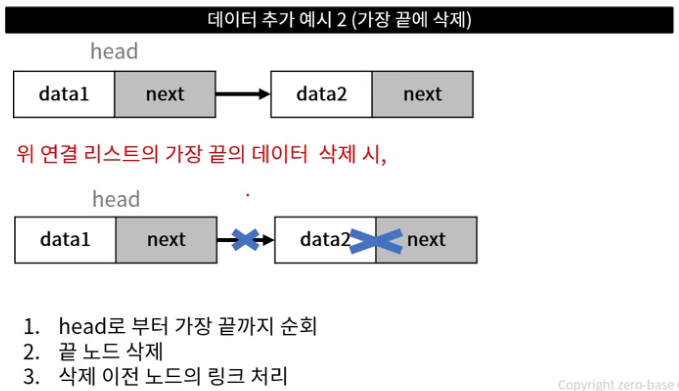
- 데이터 삭제 위치(head, 중간, tail)에 따른 연결 작업 필요


실습 코드
// 선형 자료구조 - 연결 리스트
// 단순 연결 리스트 (simple ver.) 기본 구조 구현

// 노드
class Node {
    // 값과 링크..
    int data;
    Node next; // 자기 자신의 클래스를 가리킬 노드 자료형 써주고 next 써주면
    // 여러 노드들이 있을 때 다음 노드들을 가리키는 역할로 next 변수를 사용하는 것

    // 생성자 만들기
    Node() {}
    // 노드 클래스를 생성할 때 데이터랑 링크를 넣어서 바로 생성할 수 있게끔 준비 완료
    Node(int data, Node next) {
        this.data = data;
        this.next = next;
    }
}

class LinkedList {
    Node head; // head 역할

    // 생성자 만들기
    LinkedList() {}
    LinkedList(Node node) {
        this.head = node;
    }

    //  연결 리스트 비어있는지 확인
    public boolean isEmpty() {
        if (this.head == null) {
            return true;
        }
        return false;
    }

    //  연결 리스트의 맨 뒤에 데이터 추가
    public void addData(int data) {
        if (this.head == null) { // head에 아무런 노드 없을 때
            this.head = new Node(data, null); // 처음 부분을 head로 잡아주고 다음은 null
        } else {
            Node cur = this.head; // 노드가 있으면 head로부터 노드들을 하나씩 순회하면서 끝까지 도달
            while (cur.next != null) {
                cur = cur.next;
            }
            cur.next = new Node(data, null);
        }
    }

    //  연결 리스트의 맨 뒤의 데이터 삭제
    public void removeData(){
        if (this.isEmpty()) {
            System.out.println("List is empty");
            return;
        }
        Node cur = this.head;
        Node prev = cur;

        while (cur.next != null) {
            prev = cur;
            cur = cur.next;
        }
        if (cur == this.head) {
            this.head = null;
        } else {
            prev.next = null;
        }
    }

    //  연결 리스트에서 데이터 찾기
    public void findData(int data) {
        if (this.isEmpty()) {
            System.out.println("List is empty");
            return;
        }
        Node cur = this.head;
        while (cur != null) {
            if (cur.data == data) {
                System.out.println("Data exist!");
                return;
            }
            cur = cur.next;
        }
        System.out.println("Data not found!");
    }

    //  연결 리스트의 모든 데이터 출력
    public void showData() {
        if ( this.isEmpty()) {
            System.out.println("List is empty");
            return;
        }
        Node cur = this.head;
        while (cur != null) {
            System.out.print(cur.data + " ");
            cur = cur.next;
        }
        System.out.println();
    }
}


public class Main {

    public static void main(String[] args) {

//      Test Code
        LinkedList myList = new LinkedList(new Node(1, null));
        myList.showData();      // 1

        myList.addData(2);
        myList.addData(3);
        myList.addData(4);
        myList.addData(5);
        myList.showData();      // 1 2 3 4 5

        myList.findData(3);     // Data exist!
        myList.findData(100);   // Data not found!

        myList.removeData();
        myList.removeData();
        myList.removeData();
        myList.showData();      // 1 2

        myList.removeData();
        myList.removeData();
        myList.removeData();    // List is empty

    }

}
연습 코드1_단방향
// Practice1
// 단순 연결 리스트 구현 완성

class LinkedList2 extends LinkedList { // Main에서 만든 LinkedList 상속

    LinkedList2(Node node) {
        this.head = node; // 바로 상속 받아서.. (부모클래스에서 온 멤버변수에 할당을 해주는 부분)
    }

    // 연결 리스트에 데이터 추가
    // before_data가 null인 경우, 가장 뒤에 추가
    // before_data에 값이 있는 경우, 해당 값을 가진 노드 앞에 추가
    public void addData(int data, Integer beforeData) {
        // head에 아무것도 없는 경우 노드를 새로 만들어서 해당 노드를 head에 할당하는 부분
        if (this.head == null) {
            this.head = new Node(data, null);
        } else if (beforeData == null) {
            Node cur = this.head;
            while (cur.next != null) {
                cur = cur.next;
            }
            cur.next = new Node(data, null);
        } else {
            Node cur = this.head;
            Node pre = cur;
            while (cur != null) {
                if (cur.data == beforeData) { // beforeData에 해당하는 값을 가진 노드를 찾은 상황
                    // 그 앞에 노드를 추가하는 경우에 대한 구현
                    if (cur == this.head) {
                        this.head = new Node(data, this.head);
                    } else {
                        pre.next = new Node(data, cur);
                    }
                    break;
                }
                pre = cur;
                cur = cur.next;
            }
        }
    }

    public void removeData(int data) {
        if (this.isEmpty()) {
            System.out.println("List is empty");
            return;
        }
        Node cur = this.head;
        Node pre = cur;
        while (cur != null) {
            if (cur.data == data) {
                if (cur == this.head) {
                    this.head = cur.next;
                } else {
                    pre.next = cur.next;
                }
                break;
            }
            pre = cur;
            cur = cur.next;
        }
    }
}
public class Practice1 {
    public static void main(String[] args) {

//      Test code
        LinkedList2 myList = new LinkedList2(new Node(1, null));
        myList.showData();         // 1

        myList.addData(2);
        myList.addData(3);
        myList.addData(4);
        myList.addData(5);
        myList.showData();         // 1 2 3 4 5

        myList.addData(100, 1);
        myList.addData(200, 2);
        myList.addData(300, 3);
        myList.addData(400, 4);
        myList.addData(500, 5);
        myList.showData();         // 100 1 200 2 300 3 400 4 500 5

        myList.removeData(300);
        myList.removeData(100);
        myList.removeData(500);
        myList.removeData(200);
        myList.removeData(400);
        myList.showData();         // 1 2 3 4 5

        myList.removeData(3);
        myList.removeData(1);
        myList.removeData(5);
        myList.removeData(2);
        myList.removeData(4);
        myList.showData();         // List is empty!
    }
}
연습 코드2_양방향
// Practice2
// 양방향 연결 리스트 (Doubly Linked List) 구현

class NodeBi {
    int data;
    NodeBi next;
    NodeBi prev;

    // 생성자 만들기
    NodeBi(int data, NodeBi next, NodeBi prev) {
        this.data = data;
        this.next = next;
        this.prev = prev;
    }
}

class DoublyLinkedList extends LinkedList { // LinkedList 상속받아서 필요한 부분만 만들어주기
    NodeBi head;
    NodeBi tail;

    // 생성자 만들기
    DoublyLinkedList(NodeBi node) {
        this.head = node;
        this.tail = node;
    }

    public boolean isEmpty() {
        if (this.head == null) {
            return true;
        }
        return false;
    }
    // 연결 리스트에 데이터 추가
    // before_data 가 null 인 경우, 가장 뒤에 추가
    // before_data 에 값이 있는 경우, 해당 값을 가진 노드 앞에 추가
    public void addData(int data, Integer beforeData) {
        if (this.head == null) {
            this.head = new NodeBi(data, null, null);
            this.tail = this.head;
        } else if (beforeData == null) {
            this.tail.next = new NodeBi(data, null, this.tail);
            this.tail = this.tail.next;
        } else {
            // beforeData가 있는 경우
            NodeBi cur = this.head;
            NodeBi pre =  cur;
            while (cur != null) {
                if (cur.data == beforeData) {
                    if (cur == this.head) {
                        this.head = new NodeBi(data, this.head, null);
                        this.head.next.prev = this.head;
                    } else {
                        pre.next = new NodeBi(data, cur, pre);
                        cur.prev = pre.next;
                    }
                    break;
                }
                pre = cur;
                cur = cur.next;
            }
        }
    }
    //  연결 리스트에서 특정 값을 가진 노드 삭제
    public void removeData(int data) {
        if (this.isEmpty()) {
            System.out.println("List is empty");
            return;
        }

        NodeBi cur = this.head;
        NodeBi pre = cur;

        while (cur != null) {
            if (cur.data == data) {
                if (cur == this.head && cur == this.tail) { // 노드가 하나인 케이스
                    this.head = null;
                    this.tail = null;
                } else if (cur == this.head) {
                    this.head = cur.next;
                    this.head.prev = null;
                } else if (cur == this.tail) {
                    this.tail = this.tail.prev;
                    this.tail.next = null;
                } else {
                    pre.next = cur.next;
                    cur.next.prev = pre;
                }
                break;
            }
            pre = cur;
            cur = cur.next;
        }
    }

    public void showData() {
        if (this.isEmpty()) {
            System.out.println("List id empty!");
            return;
        }

        NodeBi cur = this.head;
        while (cur != null) {
            System.out.print(cur.data + " ");
            cur = cur.next;
        }
        System.out.println();
    }

    // 끝에서부터 역순으로 출력
    public void showDataFromTail() {
        if (this.isEmpty()) {
            System.out.print("List is empty!");
            return;
        }

        NodeBi cur = this.tail;
        while (cur != null) {
            System.out.print(cur.data + " ");
            cur = cur.prev;
        }
        System.out.println();
    }
}

public class Practice2 {
    public static void main(String[] args) {

//      Test code
        DoublyLinkedList myList = new DoublyLinkedList(new NodeBi(1, null, null));
        myList.showData();          // 1

        myList.addData(2, null);
        myList.addData(3, null);
        myList.addData(4, null);
        myList.addData(5, null);
        myList.showData();          // 1 2 3 4 5
        myList.showDataFromTail();  // 5 4 3 2 1

        myList.addData(100, 1);
        myList.addData(200, 2);
        myList.addData(300, 3);
        myList.addData(400, 4);
        myList.addData(500, 5);
        myList.showData();          // 100 1 200 2 300 3 400 4 500 5
        myList.showDataFromTail();  // 5 500 4 400 3 300 2 200 1 100

        myList.removeData(300);
        myList.removeData(100);
        myList.removeData(500);
        myList.removeData(200);
        myList.removeData(400);
        myList.showData();          // 1 2 3 4 5
        myList.showDataFromTail();  // 5 4 3 2 1

        myList.removeData(3);
        myList.removeData(1);
        myList.removeData(5);
        myList.removeData(2);
        myList.removeData(4);
        myList.showData();          // List is empty!
        myList.showDataFromTail();  // List is empty!
    }
}
연습 코드3_원형
// Practice3
// 원형 연결 리스트 (Circular Linked List) 구현

class CircularLinkedList {
    NodeBi head;
    NodeBi tail;

    CircularLinkedList(NodeBi node) {
        this.head = node;
        this.tail = node;
        node.next = this.head;
        node.prev = this.head;
    }

    public boolean isEmpty() {
        if (this.head == null) {
            return true;
        }
        return false;
    }

    // 연결 리스트에 데이터 추가
    // before_data 가 null 인 경우, 가장 뒤에 추가
    // before_data 에 값이 있는 경우, 해당 값을 가진 노드 앞에 추가
    public void addData(int data, Integer beforeData) {
        if (this.head == null) {
            NodeBi newNodeBi = new NodeBi(data, null, null);
            this.head = newNodeBi;
            this.tail = newNodeBi;
            newNodeBi.next = newNodeBi;
            newNodeBi.prev = newNodeBi;
        } else if (beforeData == null) {
            NodeBi newNodeBi = new NodeBi(data, this.head, this.tail);
            this.tail.next = newNodeBi;
            this.head.prev = newNodeBi;
            this.tail = newNodeBi;
        } else {
            NodeBi cur = this.head;
            NodeBi pre = cur;
            do {
                if (cur.data == beforeData) {
                    if (cur == this.head) {
                        NodeBi newNodeBi = new NodeBi(data, this.head, this.tail);
                        this.tail.next = newNodeBi;
                        this.head.prev = newNodeBi;
                        this.head = newNodeBi;
                    } else {
                        NodeBi newNodeBi = new NodeBi(data, cur, pre);
                        pre.next = newNodeBi;
                        cur.prev = newNodeBi;
                    }
                    break;
                }
                pre = cur;
                cur = cur.next;
            } while (cur != this.head);
        }
    }

    //  연결 리스트에서 특정 값을 가진 노드 삭제
    public void removeData(int data) {
        if (this.isEmpty()) {
            System.out.println("List is empty");
            return;
        }

        NodeBi cur = this.head;
        NodeBi pre = cur;
        while (cur != null) {
            if (cur.data == data) {
                if (cur == this.head && cur == this.tail) {
                    this.head = null;
                    this.tail = null;
                } else if (cur == this.head) {
                    cur.next.prev = this.head.prev;
                    this.head = cur.next;
                    this.tail.next = this.head;
                } else if (cur == this.tail) {
                    pre.next = this.tail.next;
                    this.tail = pre;
                    this.head.prev = this.tail;
                } else {
                    pre.next = cur.next;
                    cur.next.prev = pre;
                } break;

            }
            pre = cur;
            cur = cur.next;
        }
    }

    public void showData() {
        if (this.isEmpty()) {
            System.out.println("List is empty");
            return;
        }

        NodeBi cur = this.head;
        while (cur.next != this.head) {
            System.out.print(cur.data + " ");
            cur = cur.next;
        }
        System.out.println(cur.data);
    }
}

public class Practice3 {
    public static void main(String[] args) {
        // Test code
        CircularLinkedList myList = new CircularLinkedList(new NodeBi(1, null, null));
        myList.addData(2, null);
        myList.addData(3, null);
        myList.addData(4, null);
        myList.addData(5, null);
        myList.showData();  // 1 2 3 4 5

        myList.addData(100, 1);
        myList.addData(200, 2);
        myList.addData(300, 3);
        myList.addData(400, 4);
        myList.addData(500, 5);
        myList.showData();  // 100 1 200 2 300 3 400 4 500 5

        myList.removeData(300);
        myList.removeData(100);
        myList.removeData(500);
        myList.removeData(200);
        myList.removeData(400);
        myList.showData();          // 1 2 3 4 5

        myList.removeData(3);
        myList.removeData(1);
        myList.removeData(5);
        myList.removeData(2);
        myList.removeData(4);
        myList.showData();          // List is empty!
    }
}'자료구조 l 알고리즘 > Ch. 02. 선형 자료구조' 카테고리의 다른 글
| 해시 테이블_1 (0) | 2023.03.19 |
|---|---|
| 데크(Deque) (0) | 2023.03.18 |
| 큐(Queue) (0) | 2023.03.17 |
| 스택(Stack) (0) | 2023.03.17 |
| 배열 (0) | 2023.03.17 |